Tsukubai
She ladles water
from the stone basin: gnarled hands β
Grey carp drifts away
#haiku #poem #poemaday #poetry #japanese #japan #garden #stone #architecture #nature #monochrome #blackandwhite #photography
#Tag
Tsukubai
She ladles water
from the stone basin: gnarled hands β
Grey carp drifts away
#haiku #poem #poemaday #poetry #japanese #japan #garden #stone #architecture #nature #monochrome #blackandwhite #photography
Tsukubai
She ladles water
from the stone basin: gnarled hands β
Grey carp drifts away
#haiku #poem #poemaday #poetry #japanese #japan #garden #stone #architecture #nature #monochrome #blackandwhite #photography
What are
Hearts for
If not to be
Broken
And mended,
Broken and
Mended?
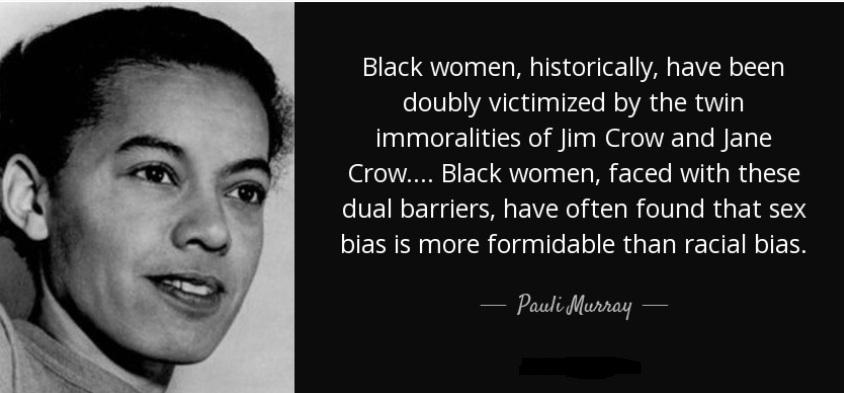
Today, for Black History Month, we remember Pauli Murray (November 20, 1910 β July 1, 1985), multiracial Black, LGBTQ Civil Rights and Gender Rights activist, labor organizer, poet, and Episcopal priest. S/he (to use the pronoun that s/he used for themself) was the first Black person to earn a Doctor of the Science of Law degree from Yale Law School, a founder of the National Organization for Women and the first Black person perceived as a woman to be ordained an Episcopal priest. Throughout the 1930s, Murray actively questioned their gender and sex, repeatedly asking doctors for hormone therapy and exploratory surgery to investigate their reproductive organs, but was denied gender-affirming medical care. When young, s/he changed their birth name from Pauline to the more masculine-sounding Pauli. And after earning a doctorate, s/he preferred people to refer to them as βdoctorβ rather than βmiss.β
In March 1940, Murray was arrested and imprisoned for refusing to sit at the back of a bus in Virginia, more than fifteen years before Rosa Parksβs famous act of Civil Disobedience. That same year, Murray became the executive secretary for National Sharecroppers Week, whose goal was to raise awareness of the poor conditions of sharecroppers and raise money for the unionβs organizing efforts. Not long after this, s/he cofounded the Congress of Racial Equality along with Bayard Rustin and others. S/he also attended Howard University in the early 1940s, where s/he coined the term βJane Crowβ to refer to the double oppression faced by black women. 1943, Murray led a lunch-counter sit-in, seventeen years before the sit-in movement began in Greensboro, North Carolina. In the early 1960s, Murray collaborated with A. Philip Randolph, Bayard Rustin, and Martin Luther King, but was critical of the sexism of the movementβs leadership. In 1966, they cofounded the National Organization for Women (NOW) with Betty Friedan, but later distanced themself from the organization because it did not seriously address the needs of working-class women of color.
After graduating from Howard, Murray tried to get into Harvard Law School, but was denied due to sexism. But Murray was accepted to the University of California Boalt School of Law, where s/he received Master of Law degree. Later earning another law degree from Yale. In 1951, they published the book Statesβ Laws on Race and Color, which Thurgood Marshall called the βbibleβ for Civil Rights litigators. In 1971, Ruth Bader Ginsburg named Murray as a coauthor of the ACLU brief in the landmark Supreme Court sex discrimination case Reed v. Reed, in recognition of her pioneering work on gender discrimination. Murray held faculty or administrative positions at the Ghana School of Law, Benedict College, and Brandeis University.
Murray wrote one of their greatest poems in 1943. It was a response to President Franklin Delano Rooseveltβs callous reaction to the Detroit Race Riot when he said that uprisings βendanger our national unity and comfort our enemies.β The poemβs title, βMr. Rooseveltβs Regrets,β riffs on the Cole Porter song βMiss Otis Regrets.β
Whatβd you get, black boy
When they knocked you down in the gutter
And they kicked your teeth out
And they broke your skull with clubs
And they bashed your stomach in?
Whatβd you get when the police shot you in the back
And they chained you to the beds
While they wiped the blood off?
Whatβd you get when you cried out to the Top Man?
When you called on the man next to God, so you thought
And you asked him to speak out to save you?
Whatβd the Top Man say, black boy?
βMr. Roosevelt regrets . . .β
#workingclass #LaborHistory #pualimurray #racism #sexism #feminism #lgbtq #transgender #gender #civilrights #civildisobedience #poetry #books #blackhistorymonth #BlackMastodon @bookstadon
Today, for Black History Month, we remember Pauli Murray (November 20, 1910 β July 1, 1985), multiracial Black, LGBTQ Civil Rights and Gender Rights activist, labor organizer, poet, and Episcopal priest. S/he (to use the pronoun that s/he used for themself) was the first Black person to earn a Doctor of the Science of Law degree from Yale Law School, a founder of the National Organization for Women and the first Black person perceived as a woman to be ordained an Episcopal priest. Throughout the 1930s, Murray actively questioned their gender and sex, repeatedly asking doctors for hormone therapy and exploratory surgery to investigate their reproductive organs, but was denied gender-affirming medical care. When young, s/he changed their birth name from Pauline to the more masculine-sounding Pauli. And after earning a doctorate, s/he preferred people to refer to them as βdoctorβ rather than βmiss.β
In March 1940, Murray was arrested and imprisoned for refusing to sit at the back of a bus in Virginia, more than fifteen years before Rosa Parksβs famous act of Civil Disobedience. That same year, Murray became the executive secretary for National Sharecroppers Week, whose goal was to raise awareness of the poor conditions of sharecroppers and raise money for the unionβs organizing efforts. Not long after this, s/he cofounded the Congress of Racial Equality along with Bayard Rustin and others. S/he also attended Howard University in the early 1940s, where s/he coined the term βJane Crowβ to refer to the double oppression faced by black women. 1943, Murray led a lunch-counter sit-in, seventeen years before the sit-in movement began in Greensboro, North Carolina. In the early 1960s, Murray collaborated with A. Philip Randolph, Bayard Rustin, and Martin Luther King, but was critical of the sexism of the movementβs leadership. In 1966, they cofounded the National Organization for Women (NOW) with Betty Friedan, but later distanced themself from the organization because it did not seriously address the needs of working-class women of color.
After graduating from Howard, Murray tried to get into Harvard Law School, but was denied due to sexism. But Murray was accepted to the University of California Boalt School of Law, where s/he received Master of Law degree. Later earning another law degree from Yale. In 1951, they published the book Statesβ Laws on Race and Color, which Thurgood Marshall called the βbibleβ for Civil Rights litigators. In 1971, Ruth Bader Ginsburg named Murray as a coauthor of the ACLU brief in the landmark Supreme Court sex discrimination case Reed v. Reed, in recognition of her pioneering work on gender discrimination. Murray held faculty or administrative positions at the Ghana School of Law, Benedict College, and Brandeis University.
Murray wrote one of their greatest poems in 1943. It was a response to President Franklin Delano Rooseveltβs callous reaction to the Detroit Race Riot when he said that uprisings βendanger our national unity and comfort our enemies.β The poemβs title, βMr. Rooseveltβs Regrets,β riffs on the Cole Porter song βMiss Otis Regrets.β
Whatβd you get, black boy
When they knocked you down in the gutter
And they kicked your teeth out
And they broke your skull with clubs
And they bashed your stomach in?
Whatβd you get when the police shot you in the back
And they chained you to the beds
While they wiped the blood off?
Whatβd you get when you cried out to the Top Man?
When you called on the man next to God, so you thought
And you asked him to speak out to save you?
Whatβd the Top Man say, black boy?
βMr. Roosevelt regrets . . .β
#workingclass #LaborHistory #pualimurray #racism #sexism #feminism #lgbtq #transgender #gender #civilrights #civildisobedience #poetry #books #blackhistorymonth #BlackMastodon @bookstadon
The Poem, Still I Rise
by Maya Angelou
You may write me down in history
With your bitter, twisted lies,
You may tread me in the very dirt
But still, like dust, I'll rise.
Does my sassiness upset you?
Why are you beset with gloom?
'Cause I walk like I've got oil wells
Pumping in my living room.
Just like moons and like suns,
With the certainty of tides,
Just like hopes springing high,
Still I'll rise.
Did you want to see me broken?
Bowed head and lowered eyes?
Shoulders falling down like teardrops.
Weakened by my soulful cries.
Does my haughtiness offend you?
Don't you take it awful hard
'Cause I laugh like I've got gold mines
Diggin' in my own back yard.
You may shoot me with your words,
You may cut me with your eyes,
You may kill me with your hatefulness,
But still, like air, I'll rise.
Does my sexiness upset you?
Does it come as a surprise
That I dance like I've got diamonds
At the meeting of my thighs?
Out of the huts of history's shame
I rise
Up from a past that's rooted in pain
I rise
I'm a black ocean, leaping and wide,
Welling and swelling I bear in the tide.
Leaving behind nights of terror and fear
I rise
Into a daybreak that's wondrously clear
I rise
Bringing the gifts that my ancestors gave,
I am the dream and the hope of the slave.
I rise
I rise
I rise.
The Poem, Still I Rise
by Maya Angelou
You may write me down in history
With your bitter, twisted lies,
You may tread me in the very dirt
But still, like dust, I'll rise.
Does my sassiness upset you?
Why are you beset with gloom?
'Cause I walk like I've got oil wells
Pumping in my living room.
Just like moons and like suns,
With the certainty of tides,
Just like hopes springing high,
Still I'll rise.
Did you want to see me broken?
Bowed head and lowered eyes?
Shoulders falling down like teardrops.
Weakened by my soulful cries.
Does my haughtiness offend you?
Don't you take it awful hard
'Cause I laugh like I've got gold mines
Diggin' in my own back yard.
You may shoot me with your words,
You may cut me with your eyes,
You may kill me with your hatefulness,
But still, like air, I'll rise.
Does my sexiness upset you?
Does it come as a surprise
That I dance like I've got diamonds
At the meeting of my thighs?
Out of the huts of history's shame
I rise
Up from a past that's rooted in pain
I rise
I'm a black ocean, leaping and wide,
Welling and swelling I bear in the tide.
Leaving behind nights of terror and fear
I rise
Into a daybreak that's wondrously clear
I rise
Bringing the gifts that my ancestors gave,
I am the dream and the hope of the slave.
I rise
I rise
I rise.
RE: https://toot.community/@openculture/116107487587562057
Uff, was hat mich geritten, das zur ersten Handlung meines Tages zu machen!? I was not prepared. This hits a little too close to home. π
Aber was fΓΌr ein groΓartiges Gedicht. Ich verstehe, warum sich Bob Dylan nach diesem Dichter benannt hat. Und ich finde es toll, dass sich Formen mittelalterlicher Dichtung in der Moderne wiederfinden. Iggys Kodderschnauze tut dem nur einen Abbruch, wenn man den Text noch nicht gut genug kennt, um ihn beim ersten Mal richtig zu verstehen. #Lyrik #poetry
Watch Iggy Pop Perform Dylan Thomasβ βDo Not Go Gentle Into That Good Nightβ
RE: https://toot.community/@openculture/116107487587562057
Uff, was hat mich geritten, das zur ersten Handlung meines Tages zu machen!? I was not prepared. This hits a little too close to home. π
Aber was fΓΌr ein groΓartiges Gedicht. Ich verstehe, warum sich Bob Dylan nach diesem Dichter benannt hat. Und ich finde es toll, dass sich Formen mittelalterlicher Dichtung in der Moderne wiederfinden. Iggys Kodderschnauze tut dem nur einen Abbruch, wenn man den Text noch nicht gut genug kennt, um ihn beim ersten Mal richtig zu verstehen. #Lyrik #poetry
Watch Iggy Pop Perform Dylan Thomasβ βDo Not Go Gentle Into That Good Nightβ
Krater Apollon
Late laughs in a bar,
full glasses clink, whisky spills β
distant stars arc past
#haiku #poem #poemaday #poetry #berlin #streetphotography #urbanphotography #photography
Krater Apollon
Late laughs in a bar,
full glasses clink, whisky spills β
distant stars arc past
#haiku #poem #poemaday #poetry #berlin #streetphotography #urbanphotography #photography
Day 6, Fuck It
I once decided to be trans,
I think it fit well enough.
I was tired of society's dance,
I just wanted it to fuck off.
After that I got the gist,
So I needed something new.
Then I decided to be anarchist,
I found out that's imperfect too.
So now I'm putting this to pen,
Don't think it will fill my soul.
I think society is broken,
But maybe we can make it whole.
Mercedes Romero.
Mercedes Romero.
Day 5, Fights in my Head
There's war in my head I think,
Though maybe war is too strong a term.
A conflict, sometimes mild disagreement.
Should this line be stopped
when I want it to keep moving.
Is this sentence filled, with far too many,
commas?
Is this room not to filthy,
to live in (it probably is but I can't get myself to clean it at all, I hardly know where to start)
I don't, need help, I can do this, on my own, no?
Why is it always easier when help is on the way, does my shame, let me, do things, only to cover it up.
Day 6, Fuck It
I once decided to be trans,
I think it fit well enough.
I was tired of society's dance,
I just wanted it to fuck off.
After that I got the gist,
So I needed something new.
Then I decided to be anarchist,
I found out that's imperfect too.
So now I'm putting this to pen,
Don't think it will fill my soul.
I think society is broken,
But maybe we can make it whole.